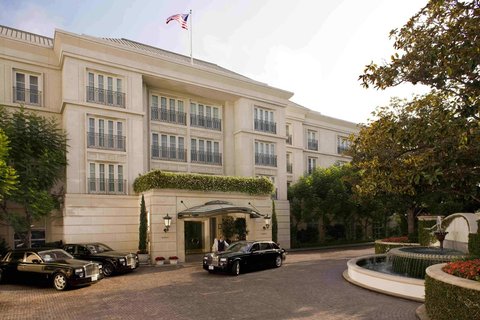
- How is this hotel positioned?
- It reads as the Los Angeles flagship of the Hong Kong-based Peninsula group, aimed at guests who expect that brand’s formal, highly personalized service in a famously competitive luxury market. Alongside Beverly Hills’ older bungalow icons, it stands out as a purpose-built grande residence that opened in 1991 and still anchors the east end of the city’s highest-tier hotels. Two MICHELIN Keys and Forbes Five-Star recognition place it among the most credentialed addresses locally, with appeal that matches entertainment executives, international luxury travelers, and loyal Peninsula guests who want consistency with sister properties abroad.
- What makes this hotel distinctive?
- Its identity blends a busy boulevard address with a surprisingly residential rhythm. Low garden villas with private entries feel closer to an estate than a tower, while the rooftop layer works almost as a resort within the city pool, dining, lounge seating, and cabanas with skyline views. Peninsula service rituals matter here: monogrammed bedding, flexible arrival and departure timing, house vehicles, and concierge depth aimed at film and business schedules. The Living Room tea salon and Belvedere have long functioned as Beverly Hills meeting places, reinforcing a social, industry-facing character many competitors lack.
- What is the hotel's setting like?
- The hotel sits where Wilshire Boulevard meets South Santa Monica Boulevard, at the practical gateway between Century City and the Rodeo Drive retail core. Street energy is immediate, yet internal courtyards, palms, and clipped greenery soften noise and frame the building as a private mansion. From upper floors and the roof deck, sightlines stretch toward downtown Los Angeles, Century City towers, and the Hollywood Hills, so guests feel centrally placed in the Westside while still wrapped in manicured outdoor space.
- What defines the hotel's design and atmosphere?
- Opened in 1991, the property presents as a limestone-clad French Renaissance mansion with symmetrical facades, balconettes, and salon scale public rooms rather than a glass tower. James Hyatt Studio shaped the layered gardens that link the central courtyard to the rooftop terrace. Guest interiors follow a Parisian residential mood: canopy beds, patterned drapery, Bergère seating, and preserved Rose Aurora marble vanities. Forchielli Glynn led the 2018 room update; Hirsch Bedner Associates later refreshed all accommodations and the roof deck with softer pinks and blues, reconfigured layouts, and yellow-striped cabanas.
- What defines the accommodation, dining and wellness experience?
- Rooms and suites favor calm, light-filled lounges with technology-controlled comfort, but the villa category defines the stay: fireplaces, terraces, and separate front and rear doors create townhouse privacy. Dining skews classic Beverly Hills socializing at The Belvedere’s European brasserie cooking with California produce, while the Roof Garden trades formality for open-air lunches and sunsets. Wellness centers on a compact full-service spa with Biologique Recherche and Medical Beauty Research protocols, plus poolside cabanas that can host lounging, work, or treatments above the city.
- Who is this hotel best suited to, and for what occasions?
- Best matched to guests who want Beverly Hills glamour with staff anticipation rather than bohemian anonymity: studio executives, award-season visitors, couples marking milestones, and families comfortable in a polished environment. Villa guests and longer-stay travelers gain space and discretion without leaving the Westside. It suits power lunches, afternoon tea meetings, spa-and-pool days, and celebratory weekends where visible luxury and reliable protocol matter as much as the room itself.